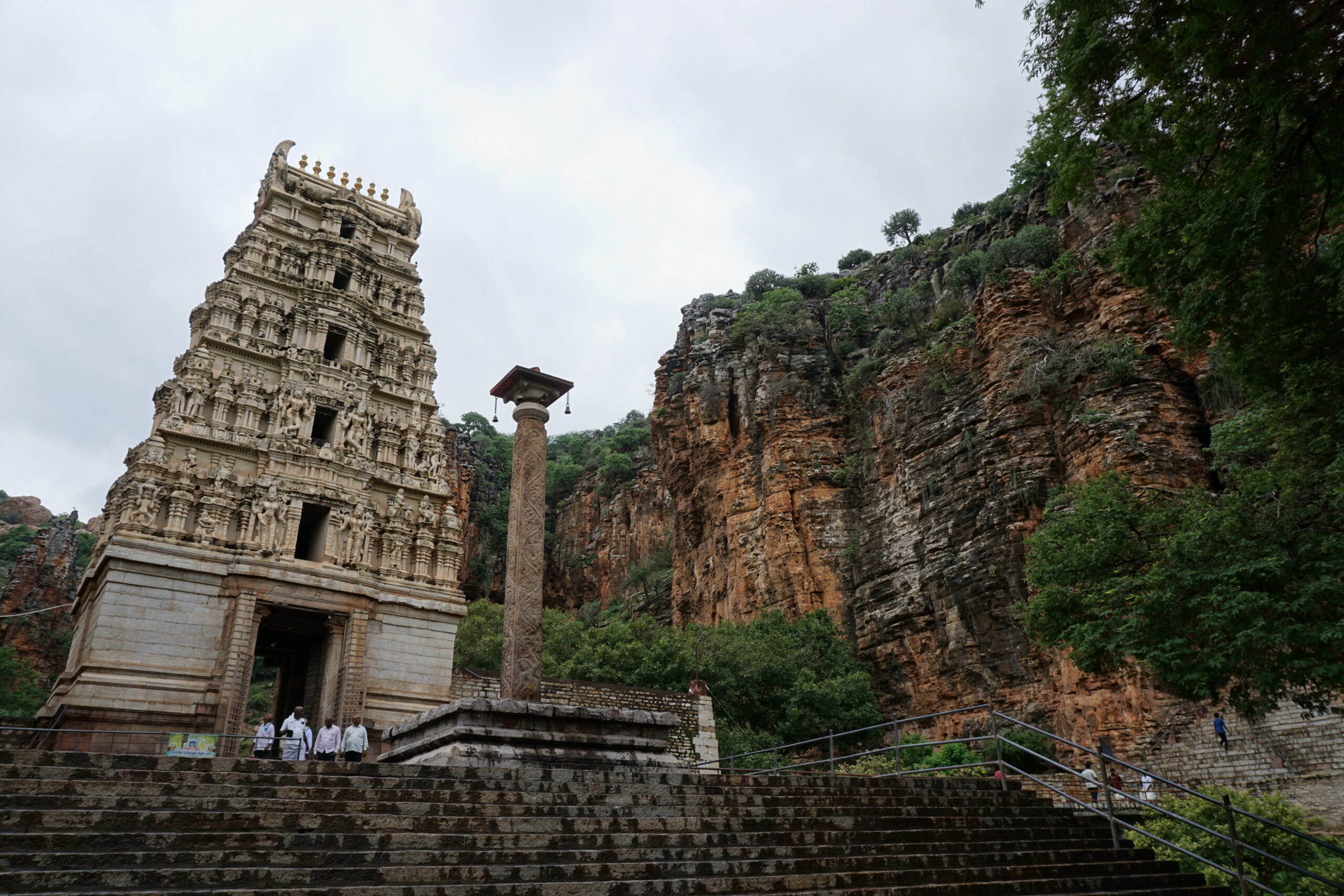
The famous growing Nandi was right in front of me. It’s said that the stone of which the Nandi is made possesses unique properties, causing it to grow 1 inch every 20 years. Legend has it that once upon a time, people could comfortably walk around the Nandi. Today, however, it is touching the temple pillars on all sides. When I looked closely, it did appear to be slightly out of shape. The Nandi rock was probably indeed expanding. It would be fascinating to investigate this further and find out what is causing the expansion of the rock.
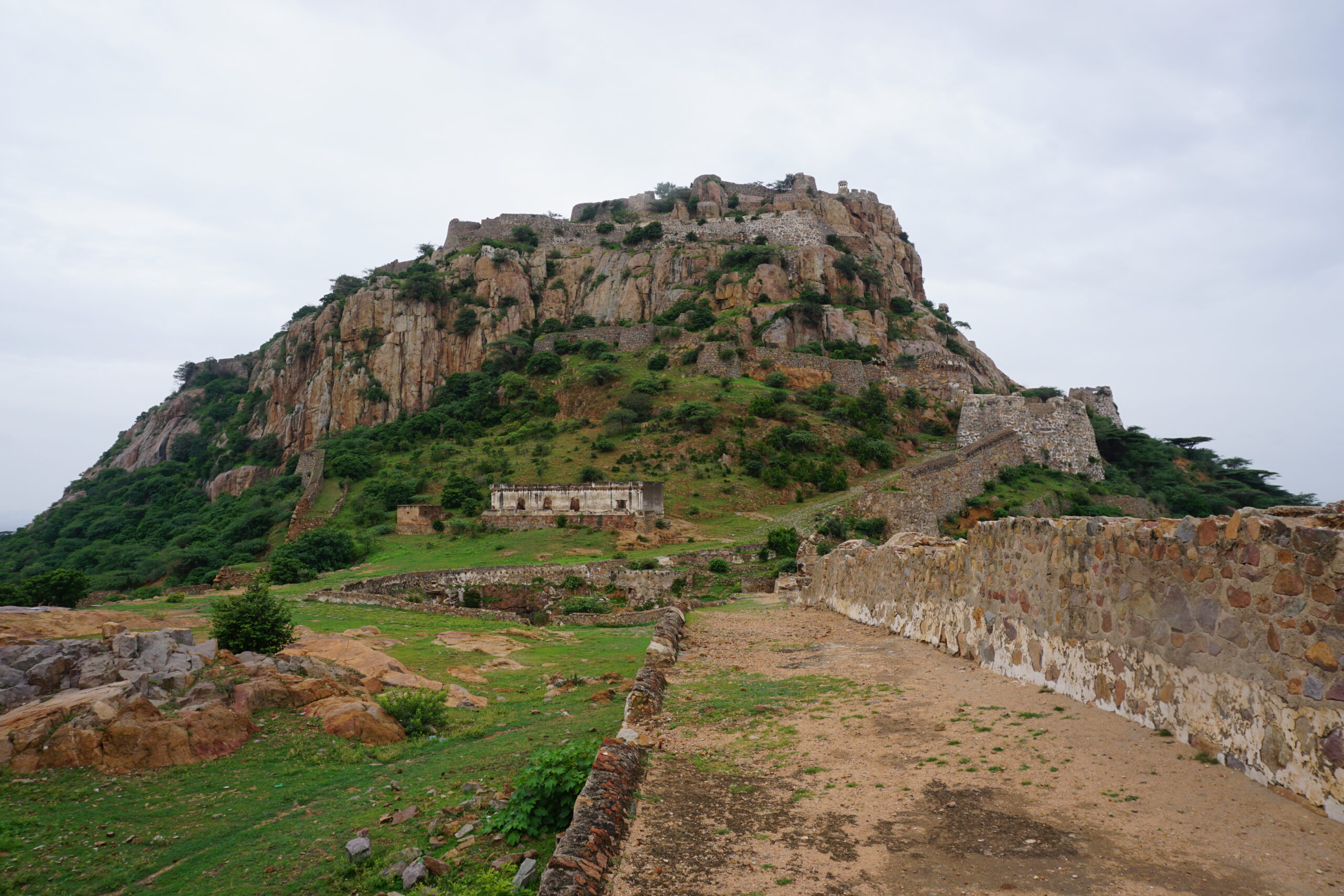
A Thrilling Ride Through Rayalaseema’s Past – Part 3 – The saga of Gooty Fort
This fort was originally built in the 11th century by a Western Chalukya king, Vikramaditya VI. It later passed through the hands of the Vijaynagar Empire, Qutub Shahi, Mughals, Marathas, the East India Company, and British India, before finally becoming part of the state of Andhra Pradesh. Each ruler added something to the existing fortification, leaving an impression of their existence. The independent Republic of India, alas, has left its mark in the form of carved-out lovers’ names and failed attempts at restoration. So be it.
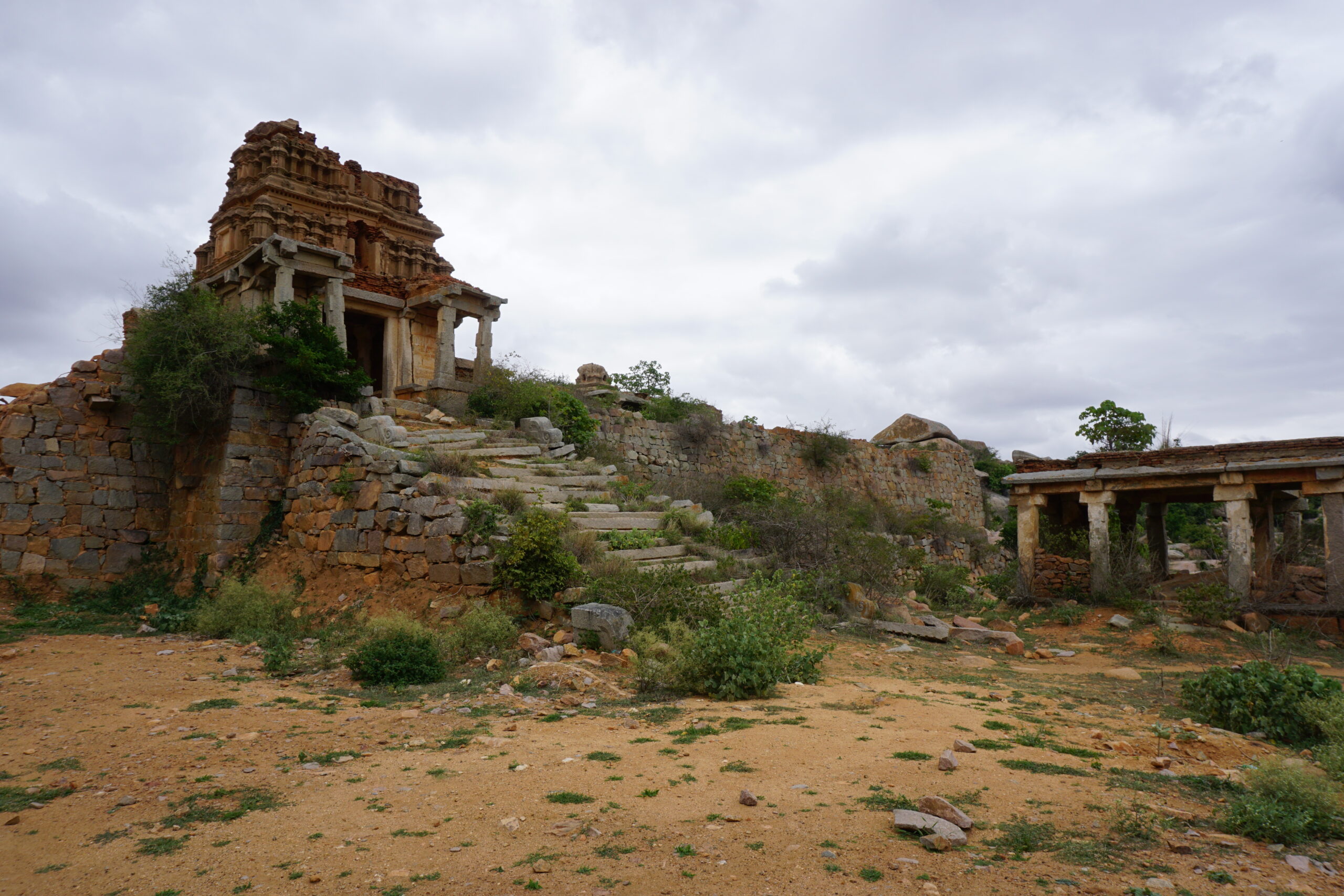
A Thrilling Ride Through Rayalaseema’s Past – Part 2 – The Penukonda Fort
To my left stood the ruins of the Lakshmi-Narasimha temple. I climbed the steep stairs of the Gopuram and entered the temple premises. Though in ruins, the overall structure was quite intact: the Gopuram, the Mandapam, the Garbha-griha—everything was recognizable. A small Hanuman statue was placed at the entrance. The air was filled with a mystic silence, disrupted only by the slow wind blowing through the broken walls and pillars. It was quite an “another-world-like” moment.
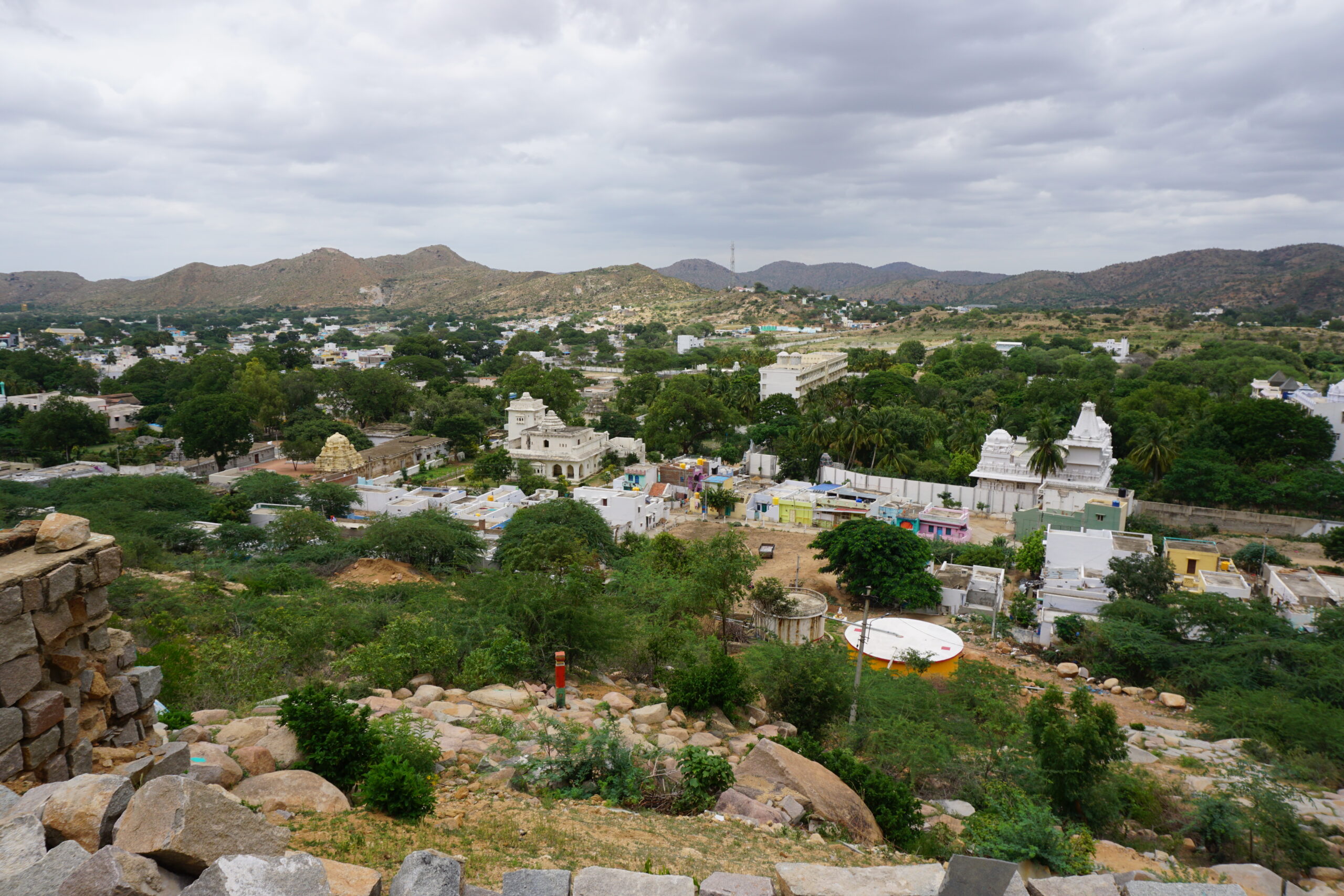
A Thrilling Ride Through Rayalaseema’s Past – Part 1 – The Penukonda Palaces
My first stop was Penukonda. This town was once the summer capital of the Vijaynagar empire of Hampi. Emperor Venkatapathi Rayalu, Krishnadevray’s successor, appointed Koneti Nayadu as the governor of Penukonda. Koneti Nayadu and his lineage ruled the region for several centuries. Following the catastrophic battle of Talikota, which saw the fall of Vijaynagar, Penukonda even became the capital of the remaining empire. Today, it’s a small town with historical monuments peppered throughout.
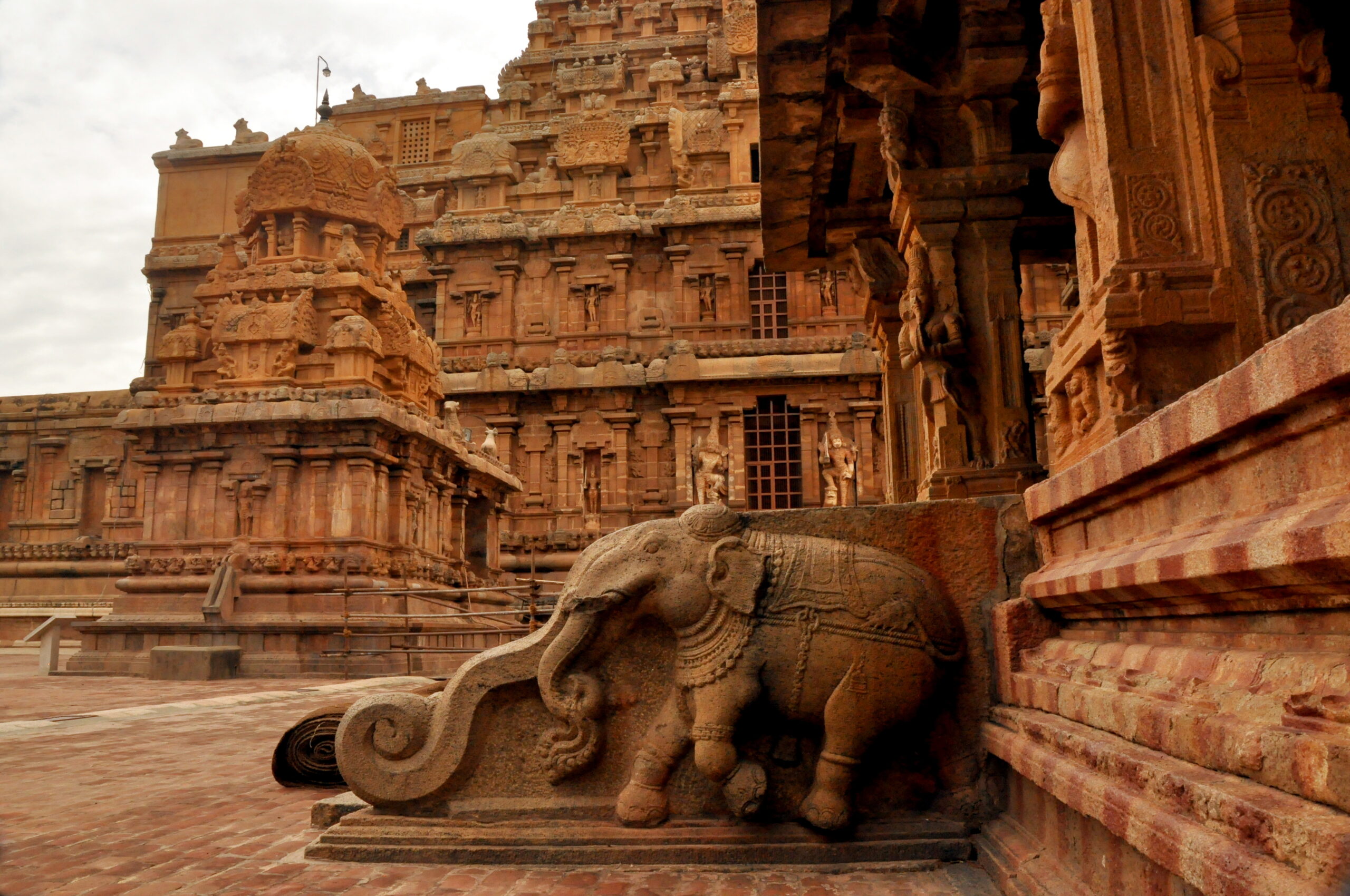
The Grandeur of the Great Living Chola Temples – a World Heritage Site in Tamilnadu, India
When you think of South India, what comes to your mind first? For many, it’s […]
Traversing Madhya Pradesh – Part 10 – Padavali and Mitawali | मध्य प्रदेशातली मुशाफिरी – भाग १० – पडावली आणि मितावली
असे म्हणतात की त्या काळी सूर्याच्या अयन रेषेच्या आधाराने गणित आणि खगोलशास्त्राचे प्रशिक्षण देण्यासाठी या मंदिराच्या वास्तूचा प्रयोग केला जाई. त्या काळी तंत्र परंपरेचा मोठा प्रभाव होता. या परंपरेचे साधक चौसष्ठ योगिनींची पूजा करत. योगिनींची पूजा करणारा हा संप्रदाय कमालीच्या गुप्ततेत असे. आजच्या घडीला या परंपरेचे कोणी उपासक अस्तित्वात आहेत की नाही याची काहीच कल्पना नाही. त्यांचे विधी, पूजा-अर्चा इत्यादींविषयी बाहेरील माणसाला कोणती माहिती मिळणे दुरापास्त. त्यामुळे या मंदिराविषयीही फार काही माहिती उपलब्ध नाही. किंबहुना १९४० पर्यंत हे मंदिर गुलदस्त्यातच होते.
Traversing Madhya Pradesh – Part 9 – Bateshwar Temple Complex | मध्य प्रदेशातली मुशाफिरी – भाग ९ – बटेश्वर मंदिर समूह
पहिला थांबा होता बटेश्वर मंदिर समूह. इथे साधारण सातव्या ते आठव्या शतकात गुर्जर प्रतिहार राजवटीत बांधली गेलेली सुमारे २०० मंदिरे आहेत. तेराव्या शतकात ही मंदिरे सम्पूर्ण जमीनदोस्त झाली. त्याचे कारण नक्की मुस्लीम आक्रमणे होते की भूकंप हे नक्की सांगता येत नाही. मात्र एकोणिसाव्या शतकात जेव्हा ही जागा पुन्हा निदर्शनास आली तेव्हा इथे दगडांचा नुसता ढिगारा होता. २००५ मध्ये के के मुहम्मद या ASI च्या अधिकाऱ्याने या मंदिरांची पुन्हा उभारणी करण्याचा विडा उचलला. तेव्हा हा सगळा भाग चंबळ खोऱ्यातील दरोडेखोरांच्या हातात होता. मुळातच हा भाग कित्येक दशकांपासून दरोडेखोरांसाठी कुप्रसिद्ध होता. मात्र मुहम्मद यांनी त्यांच्या म्होरक्याला हे समजावले की मंदिरे त्यांच्या पूर्वजांनी बांधलेली आहेत. मग तो पुनर्स्थापनेस मदत करण्यास राजी झाला.
Traversing Madhya Pradesh – Part 3 – Architectural Jewels of Khajuraho Main Temple Complex | मध्य प्रदेशातली मुशाफिरी – भाग ३ – खजुराहोची स्थापत्यरत्ने – मुख्य मंदिर समूह
खजुराहोचे पूर्वीचे नाव खर्जूरवाहक असे होते. इथे मोठ्या संख्येने असलेल्या खजुरांच्या झाडांमुळे हे नाव पडले असावे. जवळच असलेले महोबा म्हणजे चंडेल राजांची राजधानी होती. चंडेल राजांनी नवव्या ते तेराव्या शतकांदरम्यान मध्य भारतावर राज्य केले. त्यांपैकी यशोवर्मन आणि धंगदेव राजांची राजवट म्हणजे चंडेल साम्राज्याचा सुवर्णकाळ मानला जातो. त्यांच्याच कारकिर्दीत ही प्रसिद्ध मंदिरे बांधली गेली.
Traversing Madhya Pradesh – Part 2 – Architectural Jewels of Khajuraho | मध्य प्रदेशातली मुशाफिरी – भाग २ – खजुराहोची स्थापत्यरत्ने – पूर्व मंदिरसमूह
खजुराहो मध्ये एकूण ८५ मंदिरे होती. किंबहुना, ८५ मंदिरांच्या अस्तित्वाचे पुरावे उपलब्ध आहेत. त्यांपैकी आज केवळ २२ मंदिरे उभी आहेत. या मंदिरांचे तीन मुख्य समूह आहेत – पूर्व, पश्चिम, आणि दक्षिण. पश्चिम समूह हा मुख्य समूह समजला जातो. इथली ११ मंदिरे ASI ने संरक्षक भिंत आणि सभोवती उद्यान वगैरे उभारून जतन केली आहेत. हा समूह हॉस्टेलच्या समोरच होता. इथे संध्याकाळी लाईट अँड साउंड शो असतो. त्यामुळे हा समूह संध्याकाळी बघायचा आणि तसेच शो बघायला जायचे असे मी ठरवले.
Traversing Madhya Pradesh – Part 1 – Mumbai to Khajuraho via Delhi | मध्य प्रदेशातली मुशाफिरी – भाग १ – मुंबई ते खजुराहो व्हाया दिल्ली
खजुराहो – दहाव्या शतकातल्या मंदिरांसाठी सुप्रसिद्ध असलेली जागा. त्याहून प्रसिद्ध म्हणजे इथली गूढ मैथुनशिल्पे! परदेशात असताना बरेच जण विचारायचे त्याबद्दल. किंबहुना खजुराहो पाहून आलेले लोक मला भारतापेक्षा परदेशातच जास्त भेटले असतील! तर अशी जगप्रसिद्ध जागा बऱ्याच वर्षांपासून बकेटलिस्ट वर होती. त्या जोडीने ओरछा आणि ग्वालियरविषयीही ऐकून होतो. शेवटी एकदा सुट्टीचा योग जुळवून आणला आणि खजुराहो – ओरछा – ग्वालियर अशी सहा दिवसांची सहल ठरवली. प्रत्येक जागेसाठी साधारण दीड ते दोन दिवस ठरवले.