The next day, I woke up around 7 am, still feeling some body ache. And today’s ride was going to be even more strenuous. However, the excitement of visiting new places completely overshadowed the discomfort, and I started my trip. The weather was cloudy, and as I started riding on the highway, I could feel tiny raindrops hitting the helmet. I simply hoped the rain wouldn’t intensify and continued riding.
Gooty Fort: A Hilltop Citadel
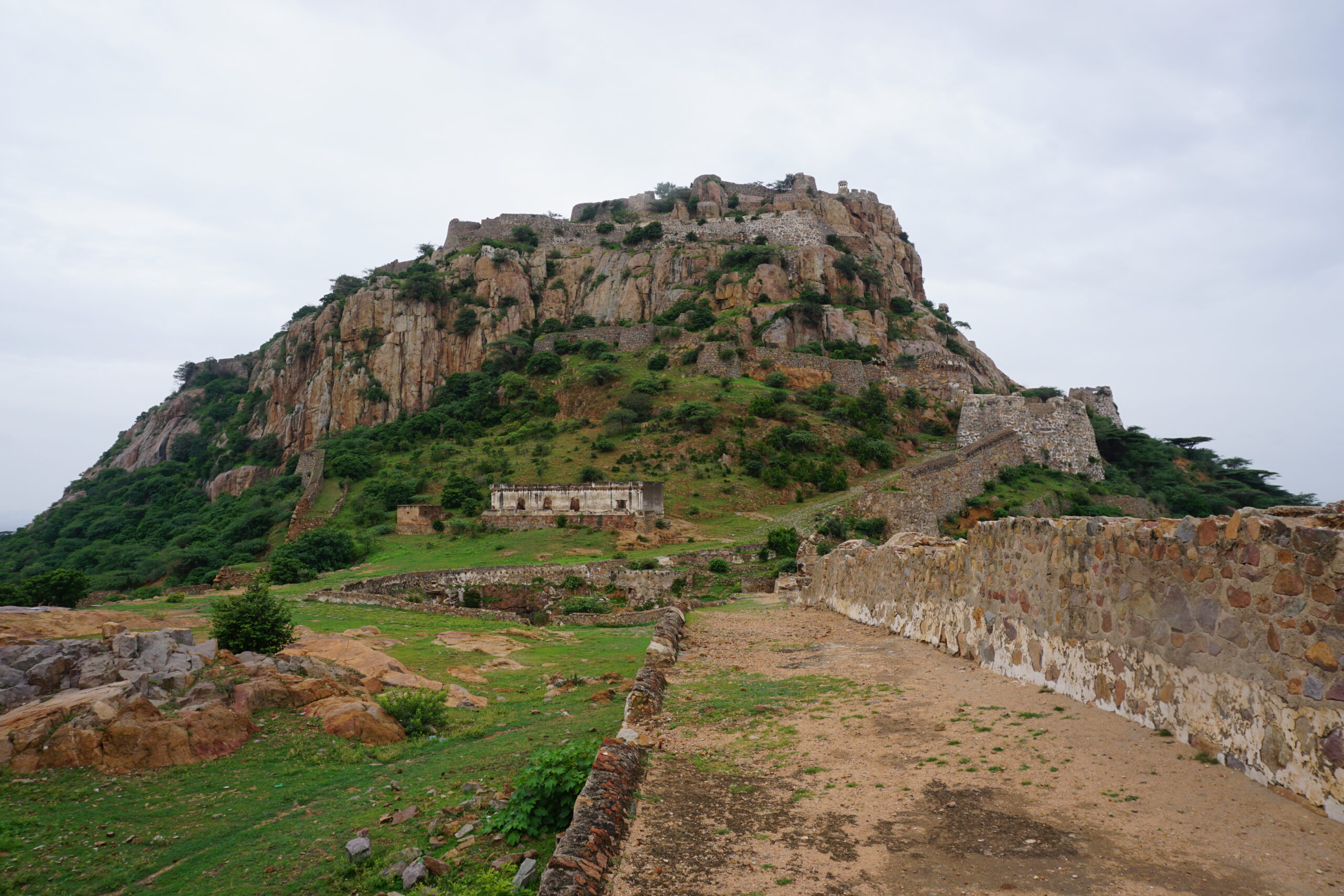
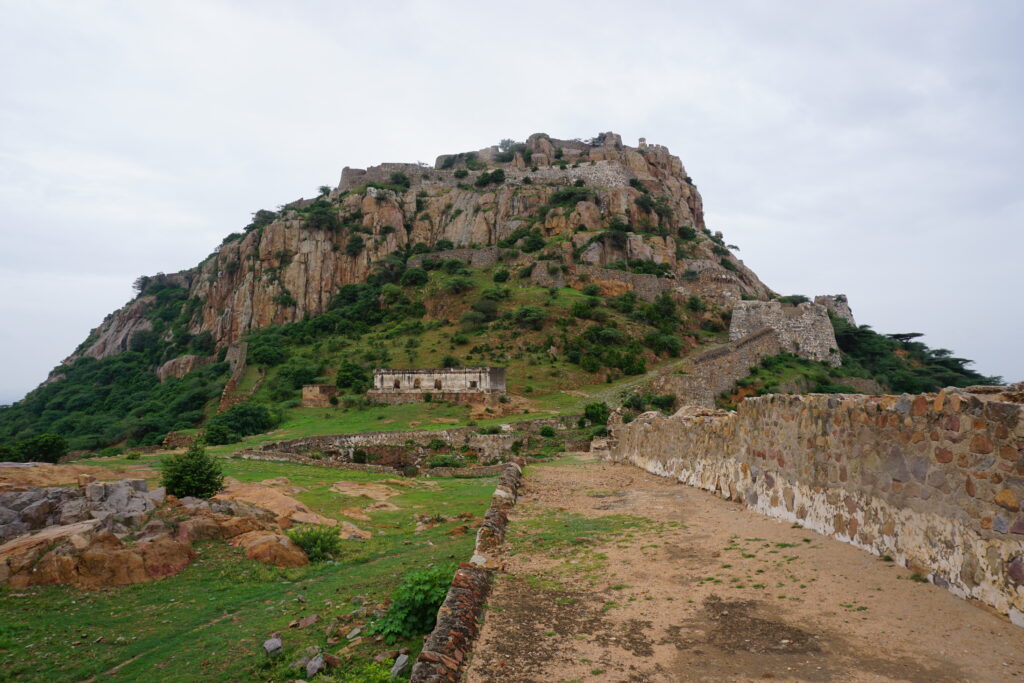
My first stop was Gooty fort, about 60 km from Anantpur. The highway cut through scrub forests and grasslands, interspersed with green paddy fields. In little more than half an hour, a few rocky hills emerged on the horizon. I was close. Moving closer, I could clearly observe fortification on one of those hills—my guess was right; it was the Gooty fort.
I took a left turn and entered the Gooty town. After the peaceful, undisturbed ride on the highway, the humdrum of the town seemed annoying. Gooty was a place somewhere between a village and a small town: mostly dirty, chaotic, and seemingly completely oblivious to its own glorious past. Wading through the traffic of people, vehicles, and animals, I finally reached the base of the fort. I parked my bike, made an entry at the check post, and started my hike.
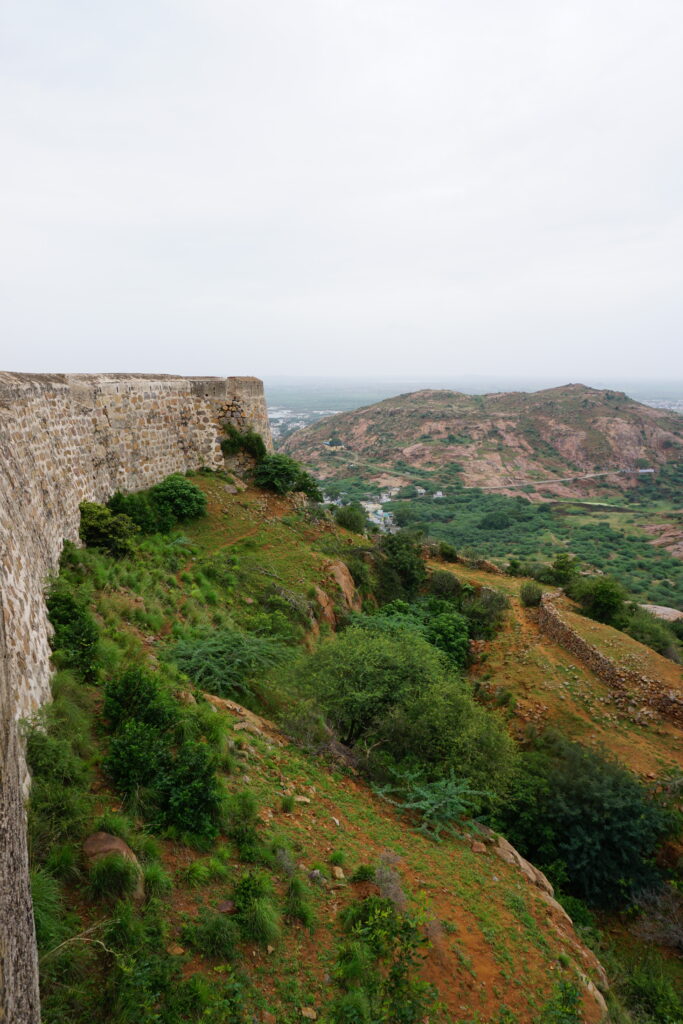

The fort, also known as Rayadurg, sits on a range of hills connected by spurs, with its highest point rising 680 m above mean sea level. Its boundary wall stretches for miles. Right at the base of the hill was the European Cemetery. Following the defeat of Tipu Sultan, the East India Company sought to annex all principalities in South India, and Gooty was one of them. A fierce battle ensued, and several English soldiers lost their lives, buried here at the base of the fort. The cemetery was closed, so I took a quick glimpse from outside and moved uphill.
This fort was originally built in the 11th century by a Western Chalukya king, Vikramaditya VI. It later passed through the hands of the Vijaynagar Empire, Qutub Shahi, Mughals, Marathas, the East India Company, and British India, before finally becoming part of the state of Andhra Pradesh. Each ruler added something to the existing fortification, leaving an impression of their existence. The independent Republic of India, alas, has left its mark in the form of carved-out lovers’ names and failed attempts at restoration. So be it.
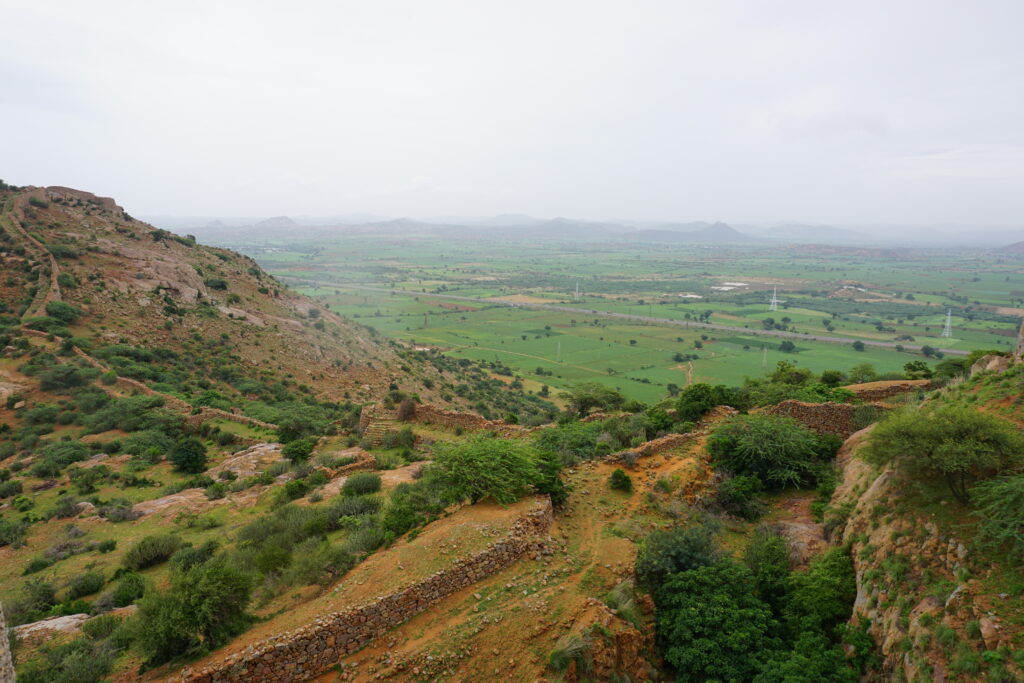
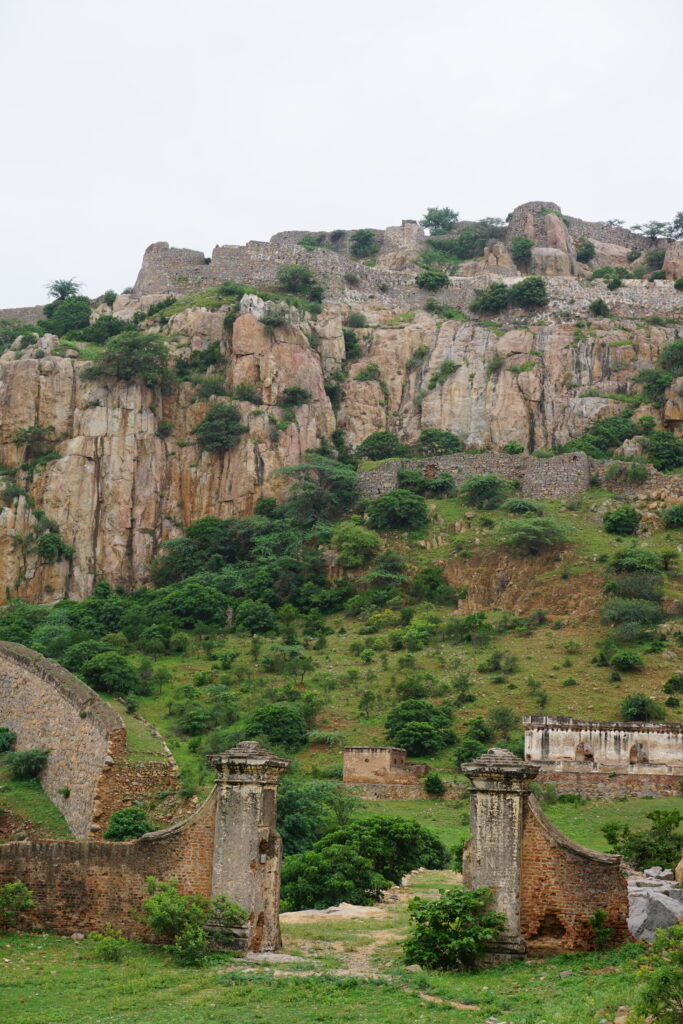
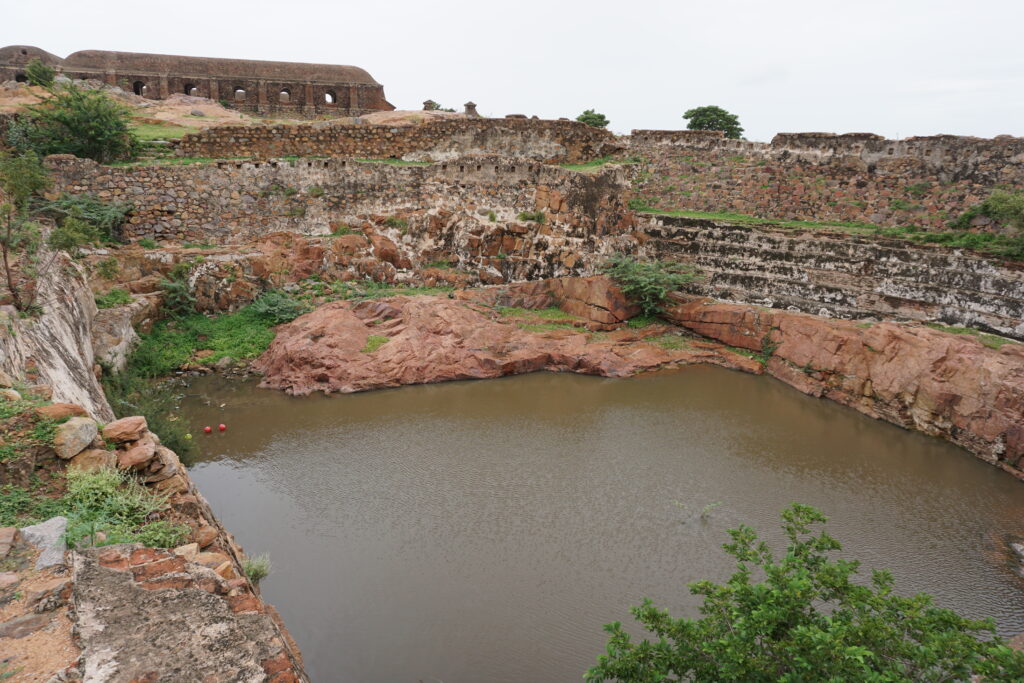
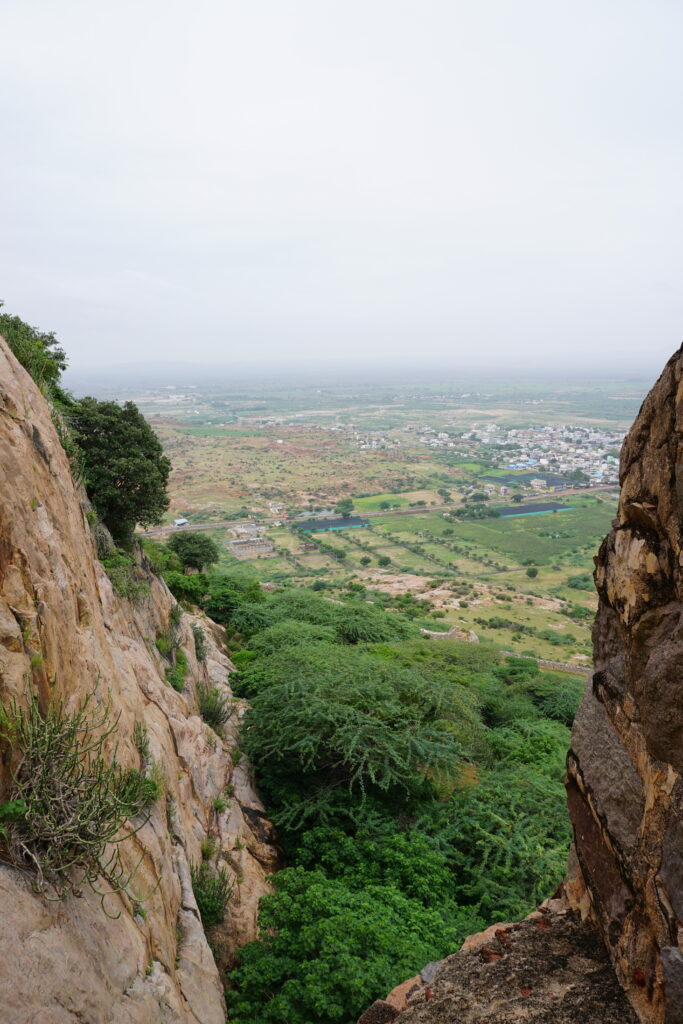
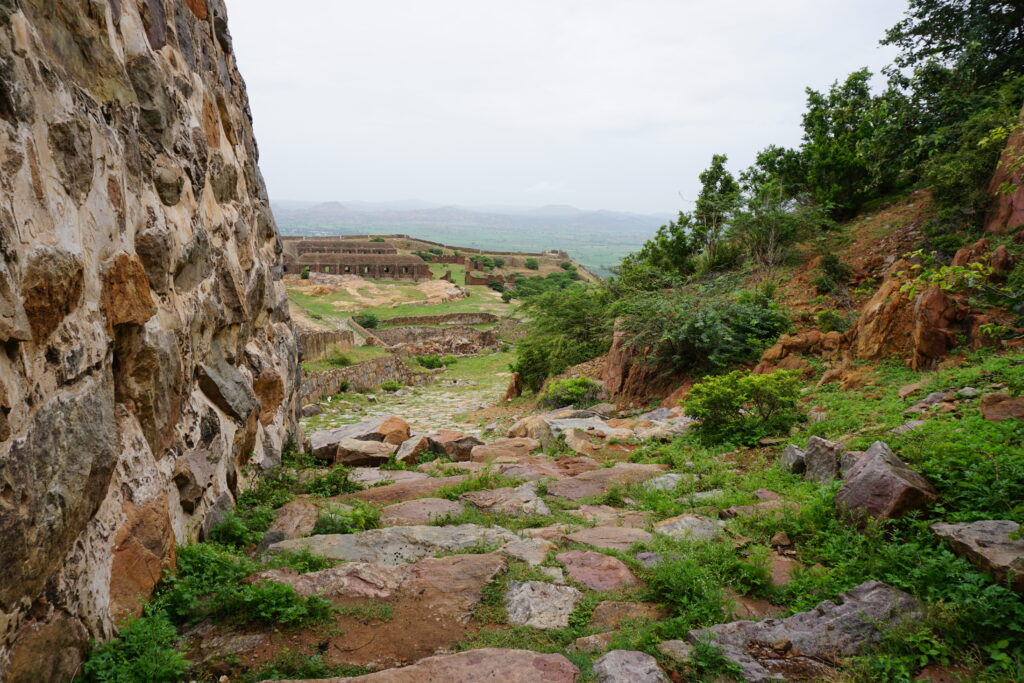
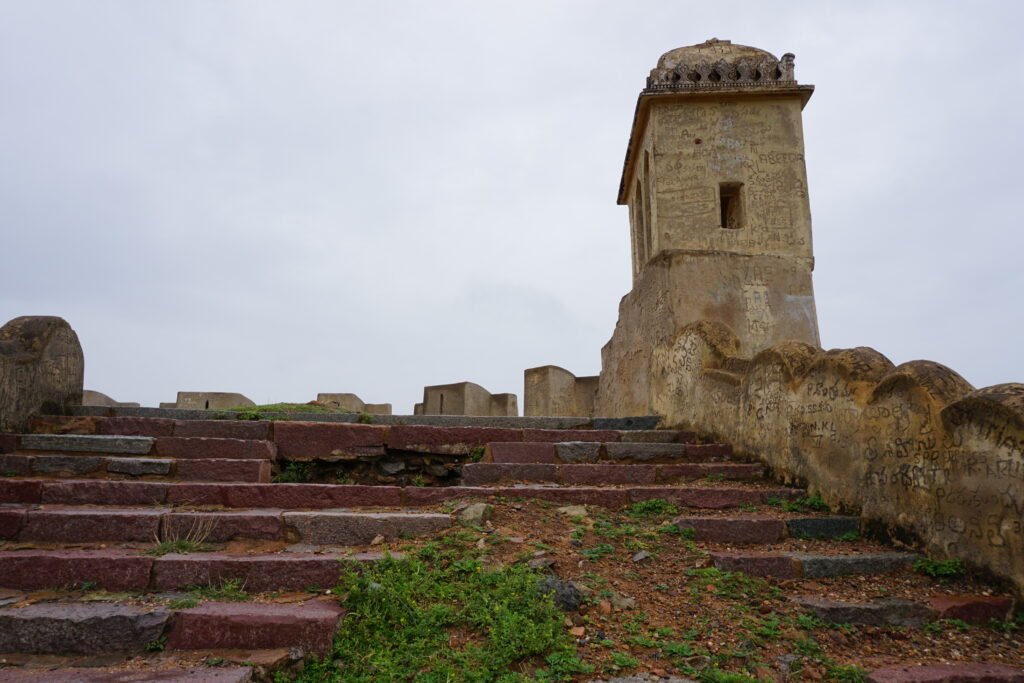
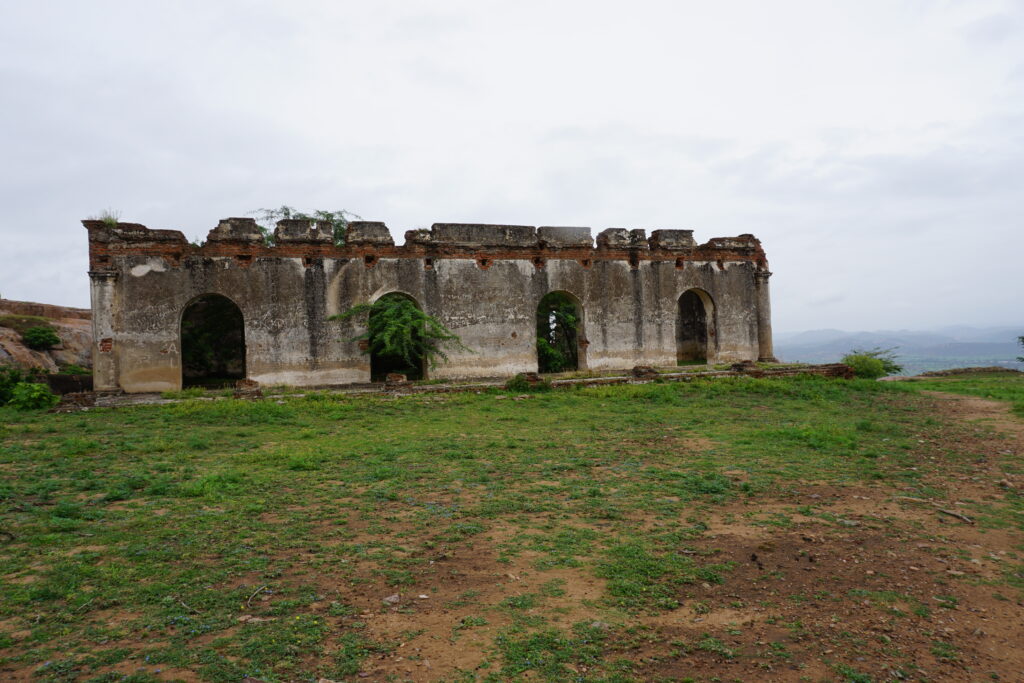
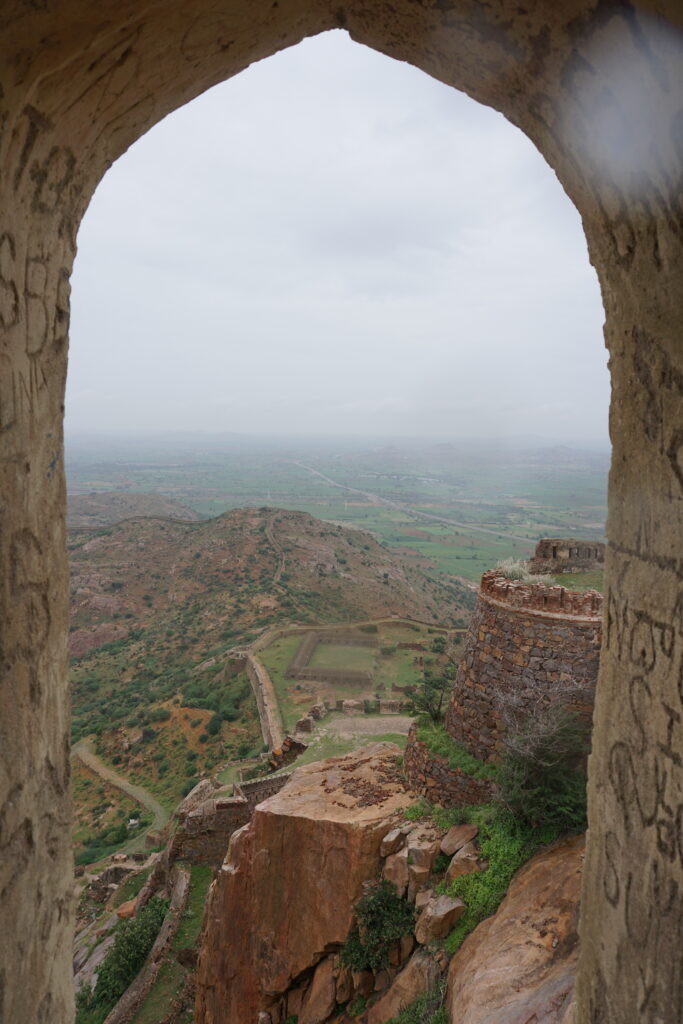
I soon reached a small plateau with a water tank at the center. Ruined buildings were scattered around—one looking like a granary, another like a horse stable. The plateau was guarded by strong walls and watch towers. I explored the area along the outer wall. From here, the summit of the hill looked majestic. From the watch towers, I could see the fort wall stretching across adjoining hills and cutting through the town below.
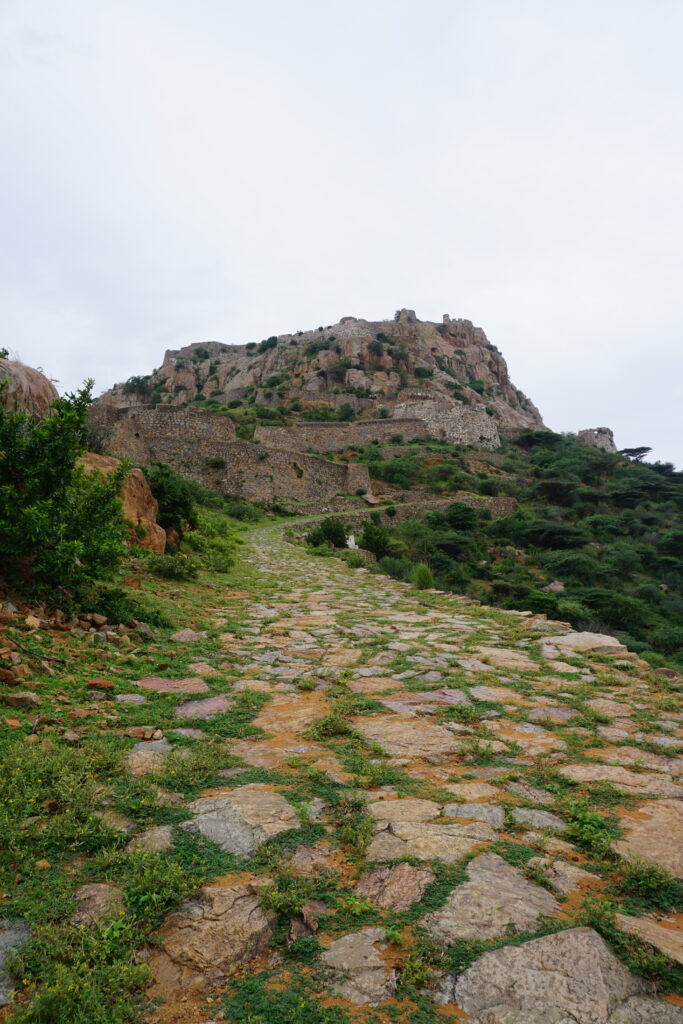
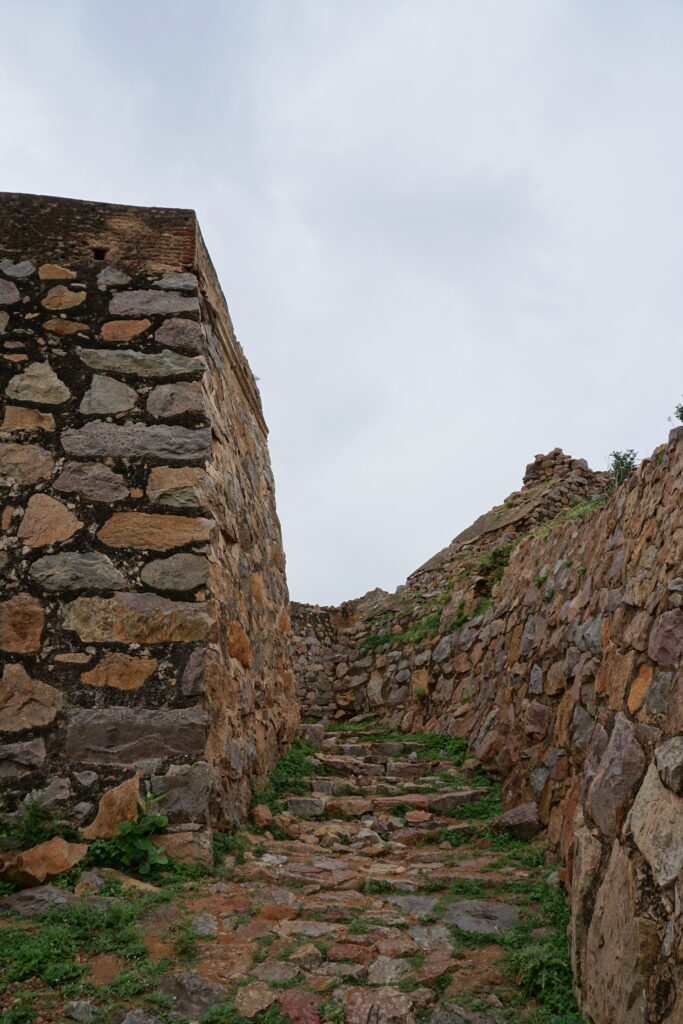
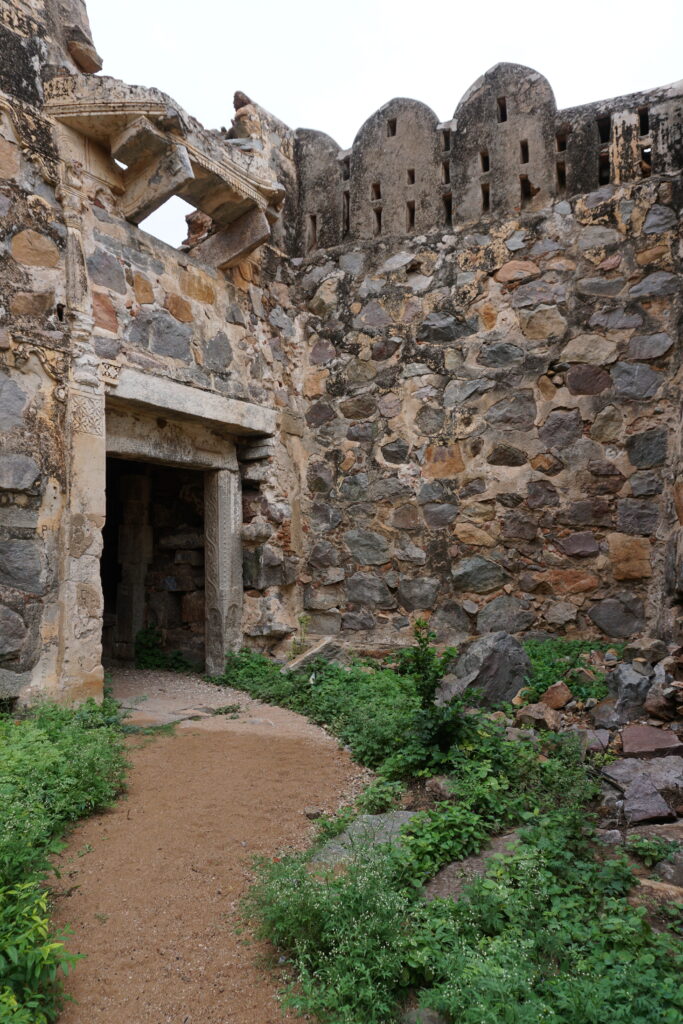
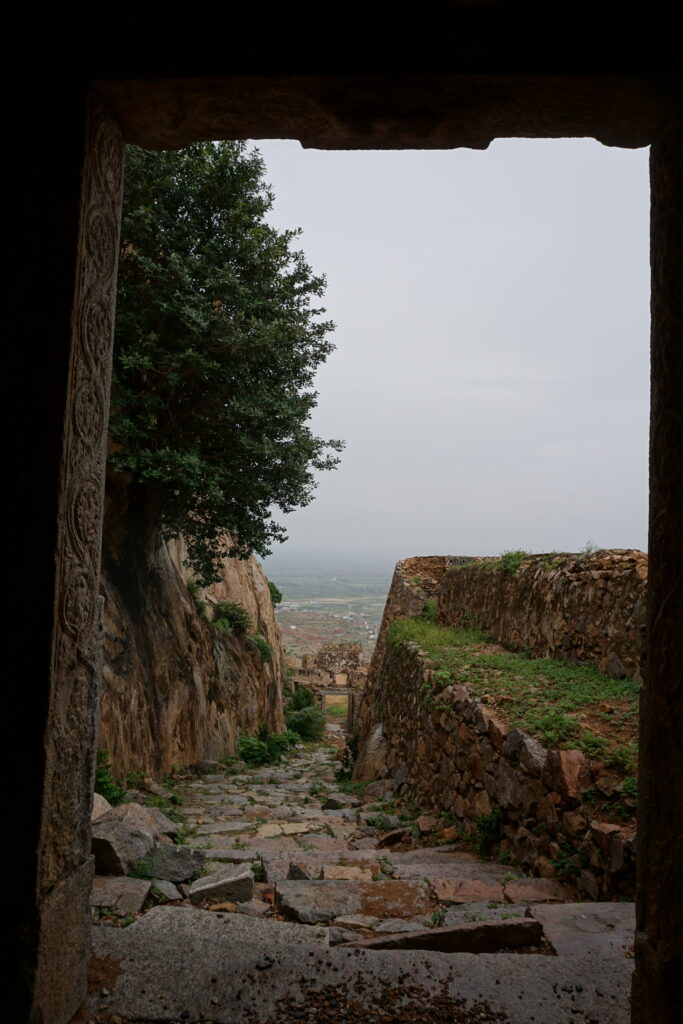
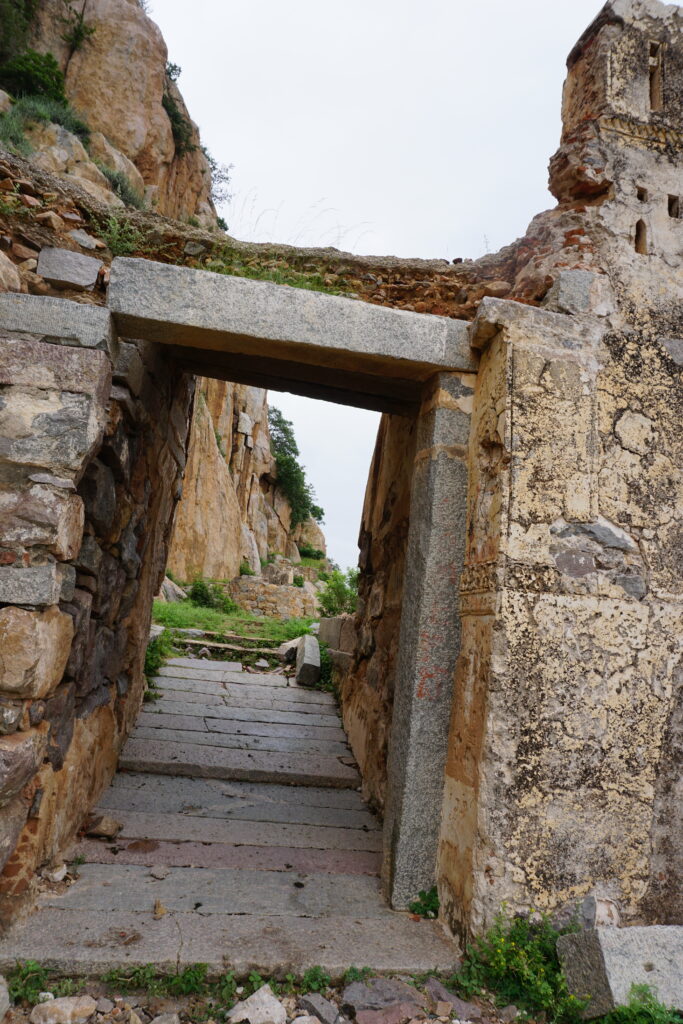
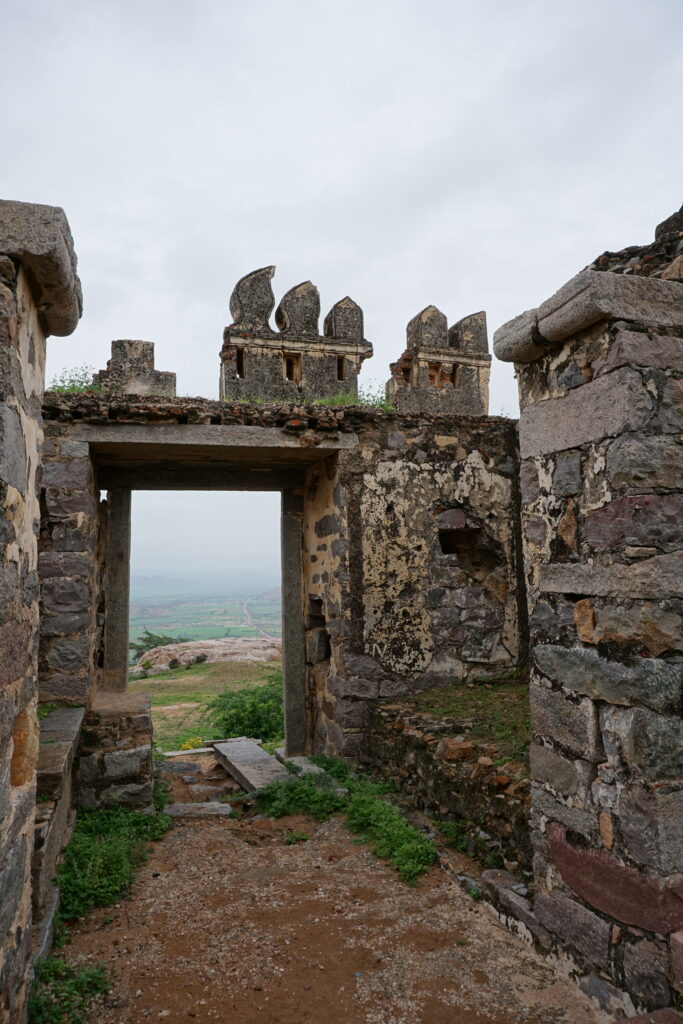
I continued my hike. After a few steps, the path became steep. Huge gates were laid on the path, and the style of fortification reminded me of the forts in Maharashtra. Each bend and curve of the path offered a new, different view of the surrounding landscape. Most importantly, there was not a single human being around! I was truly enjoying my solitude. As I gained altitude, the weather became misty and the wind grew cooler.
At the summit, there were several ruined buildings. One of these was Murari Rao’s seat. Murari Rao was a Maratha general who made this fort his permanent residence. It is said he used to play chess and swing at the highest point of the fort. I loitered around, exploring the ruins and clicking pictures. It was 10 minutes to 11, and I realized I had spent a whopping two hours on the fort. I rushed down and started my journey.
My next destination was Yaganti. As I rode on the highway, huge, dark clouds began to gather. My worst nightmare—getting caught in a heavy downpour—was about to materialize. The highway passed through a deserted area, making finding shelter nearly impossible. I decided to reach the nearest town and wait out the rain there. I reached the town of Peapully, from where I had to take a right turn. Still no signs of rain. But the road looked wet. “Probably there was already a spell of rain in this area. If it rained recently, it probably won’t rain again very soon,” the weatherman in my hopeful mind spoke. I raised the accelerator and moved ahead. The road, however, was in mayhem. Repair work was ongoing at most places, and the recent shower had messed things up further. Wading through the lunar-like craters, I finally reached the Yaganti temple.

To be continued…